🇬🇧 High-Barrier Films — The Silent Guardians of Your Packaged Food
Ever wondered why your potato chips stay crispy for 6 months, or why coffee retains its aroma for a year? The answer lies in high-barrier films — engineered packaging that blocks oxygen, moisture, light, and aromas from reaching your product. At VKS Tech, we've worked with the entire barrier spectrum — from plain BOPP to advanced AlOx coatings — and here's what every packaging professional should know.
What Are Barrier Properties?
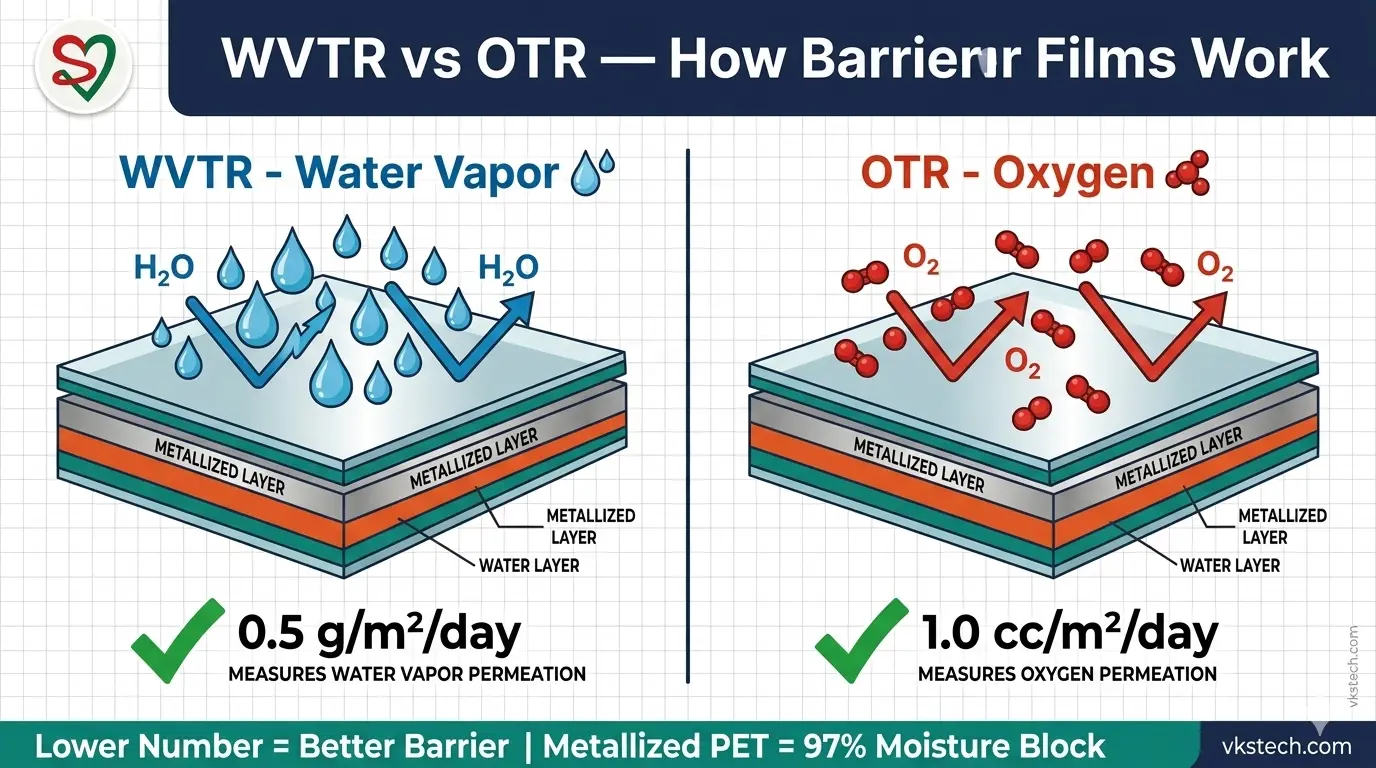
Two key measurements define a film's barrier strength:
- WVTR (Water Vapor Transmission Rate): How much moisture passes through (g/m²/day). Lower = better.
- OTR (Oxygen Transmission Rate): How much oxygen passes through (cc/m²/day). Lower = better.
Real Barrier Performance Data (Industry Verified)
| Film Type | WVTR (g/m²/day) | OTR (cc/m²/day) | Moisture Block | Oxygen Block |
|---|---|---|---|---|
| Plain PET 12μ | 15.0 | 100 | Baseline | Baseline |
| Metallized PET 12μ | 0.5 | 1.0 | 97% reduction | 99% reduction |
| AlBond/AlOx Coated | 0.05 | 0.1 | 99.7% reduction | 99.9% reduction |
| Aluminium Foil | 0.0 | 0.0 | 100% | 100% |
The Barrier Spectrum — What Each Level Delivers
- Plain Films (Low Barrier): Shelf life 2-4 weeks. Used for: bread bags, produce wraps, short-shelf items.
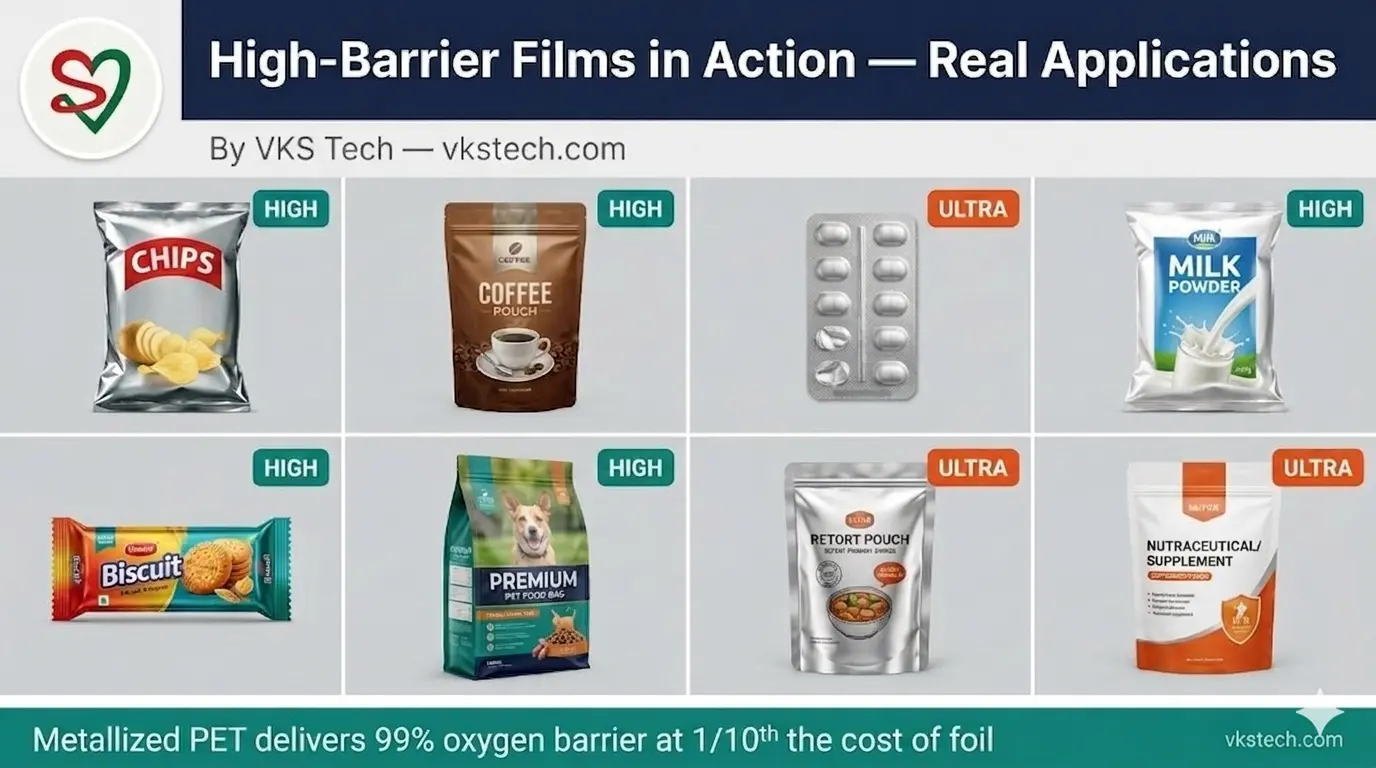
- Metallized Films (High Barrier): Shelf life 6-12 months. Used for: chips, biscuits, coffee, tea, milk powder.
- AlBond/AlOx (Ultra-High Barrier): Shelf life 18-24 months. Used for: pharma, nutraceuticals, retort pouches, premium snacks.
- Aluminium Foil Laminates: Shelf life 2+ years. Used for: military rations, long-storage products, IV fluids.
What Barriers Protect Against
- Oxygen: Prevents oxidation, rancidity in fats, color fading, vitamin loss
- Moisture: Maintains crispness, prevents caking, stops mold growth
- Light: Protects light-sensitive ingredients (vitamins, flavors, pharmaceuticals)
- Aromas: Keeps flavors in, prevents cross-contamination from outside smells
Cost vs Barrier Trade-off
Higher barrier = higher cost. The trick is matching barrier level to actual product needs. Over-engineering packaging wastes money; under-engineering kills shelf life and causes returns. Smart brands use data to make this decision.
🇮🇳 हाई-बैरियर फिल्में — आपके पैकेज्ड फूड के मौन रक्षक
क्या आपने कभी सोचा है कि आपके आलू चिप्स 6 महीने तक कुरकुरे क्यों रहते हैं, या कॉफी अपनी सुगंध एक साल तक क्यों बनाए रखती है? जवाब है हाई-बैरियर फिल्में — इंजीनियर्ड पैकेजिंग जो ऑक्सीजन, नमी, प्रकाश और सुगंधों को आपके उत्पाद तक पहुंचने से रोकती है। VKS Tech में, हमने पूरे बैरियर स्पेक्ट्रम के साथ काम किया है।
बैरियर गुण क्या हैं?
- WVTR (जल वाष्प संचरण दर): कितनी नमी गुज़रती है (g/m²/day)। कम = बेहतर।
- OTR (ऑक्सीजन संचरण दर): कितनी ऑक्सीजन गुज़रती है (cc/m²/day)। कम = बेहतर।
वास्तविक बैरियर प्रदर्शन डेटा
| फिल्म प्रकार | WVTR | OTR | नमी सुरक्षा |
|---|---|---|---|
| सादा PET 12μ | 15.0 | 100 | बेसलाइन |
| मेटलाइज़्ड PET | 0.5 | 1.0 | 97% कमी |
| AlBond/AlOx | 0.05 | 0.1 | 99.7% कमी |
| एल्यूमिनियम फॉयल | 0.0 | 0.0 | 100% |
बैरियर किनसे सुरक्षा देते हैं
- ऑक्सीजन: ऑक्सीकरण, वसा में विकृति, रंग फीका पड़ना रोकता है
- नमी: कुरकुरापन बनाए रखता है, फफूंद को रोकता है
- प्रकाश: विटामिन, स्वाद और दवाओं की सुरक्षा करता है
- सुगंध: स्वाद को अंदर रखता है, बाहरी गंध को रोकता है