💥 Web Break on Metalliser — How ₹4,200 Fixes Saved a Plant ₹21 Lakh/Month
Web breaks are the #1 cause of unplanned downtime on any vacuum metalliser. They are also the most misunderstood defect in our industry. Most plants blame the film supplier and call it a day. But in real plants running thousands of jumbos a year, 8 out of 10 web breaks come from something inside your own plant — a worn bearing, a cleanliness issue, a tension setting nobody bothered to verify.
This blog shows the recovery method, the 8 hidden causes ranked by how often they actually occur, and the shop floor story of how one ₹4,200 bearing was silently costing a plant ₹21 lakh every month.
📖 WHAT'S IN THIS BLOG (scroll to find your section):
3-step emergency response · 5 tear patterns · when to call supervisor
8 causes ranked by frequency · interactive diagnostic tool · 6 prevention habits
5 KPIs for Monday dashboard · ₹21L bearing story · Free downloads
🚨 PART 1 — FOR THE OPERATOR
Emergency response · Tear patterns · When to call supervisor
🚨 Operator Emergency Response — 3 Steps in 2 Minutes
Three AM. The tension alarm goes off. You look through the viewing window — the web has snapped. Don't panic and don't start adjusting parameters yet. Every web break follows the same three-step recovery. These are not optional or situational. They are mandatory in this exact order.
Step 1 — Stop Everything (10 seconds)
Hit the E-Stop. Close the vent valve. Engage the brake on both unwinder and rewinder. The goal is to freeze the machine state exactly as the break happened — this preserves evidence for diagnosis.
Step 2 — Photograph the Tear (30 seconds)
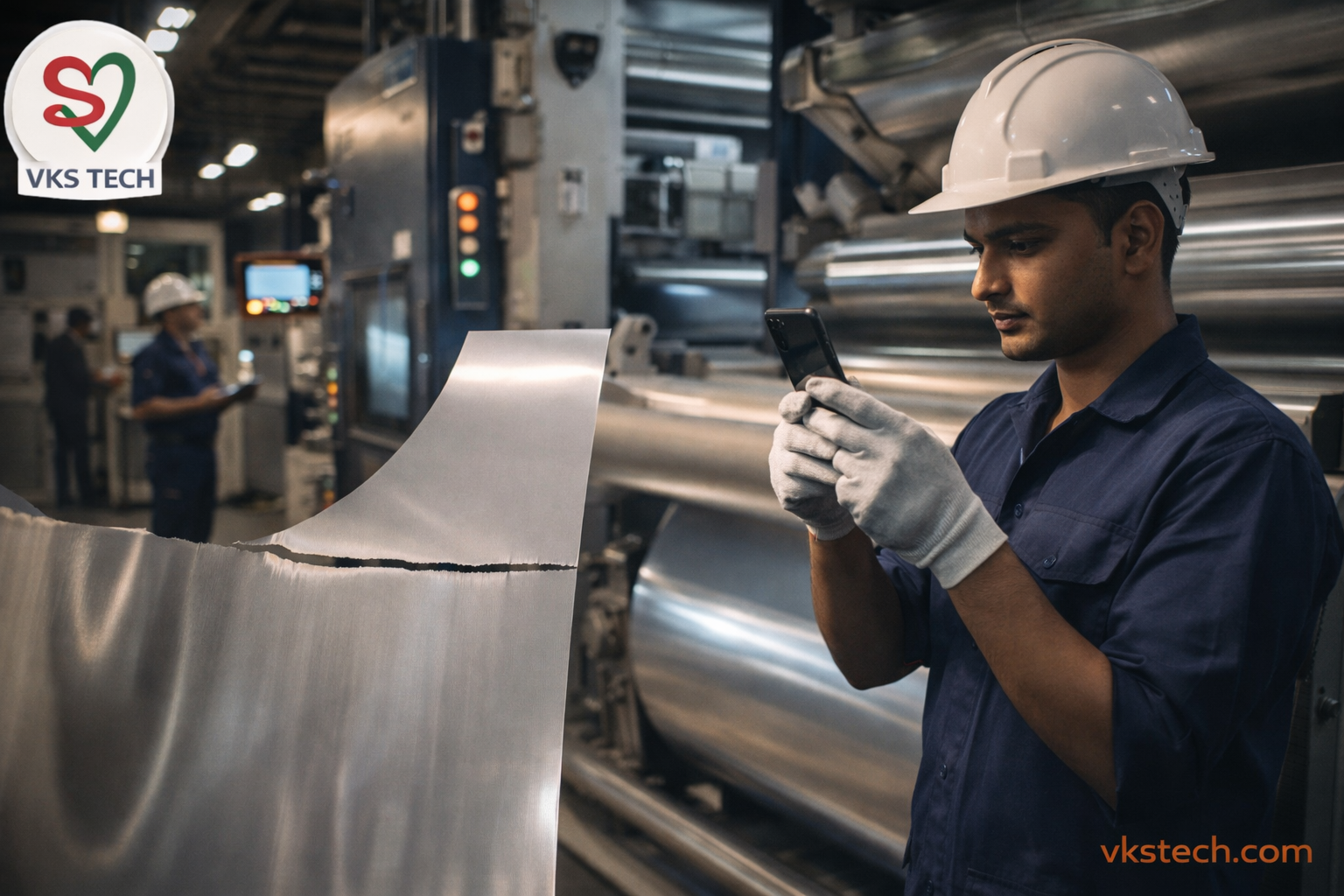
Before you touch anything, take phone photos of both torn edges — unwinder side and rewinder side. The shape of the tear tells the supervisor what caused the break. Moving or cleaning the film first destroys this evidence.
Step 3 — Log the Break Before Re-threading (60 seconds)
Open Format F/16 (Web Break Record) and fill four fields: time, jumbo number, tear location, machine speed at moment of break. This takes less than a minute and is the single most important habit separating plants that eliminate web breaks from plants that keep having them.
👀 Tear Pattern Quick Reference
The shape of the tear tells you which component failed. Before the supervisor arrives, match the tear to one of these five patterns — it saves 20 minutes of diagnostic back-and-forth.
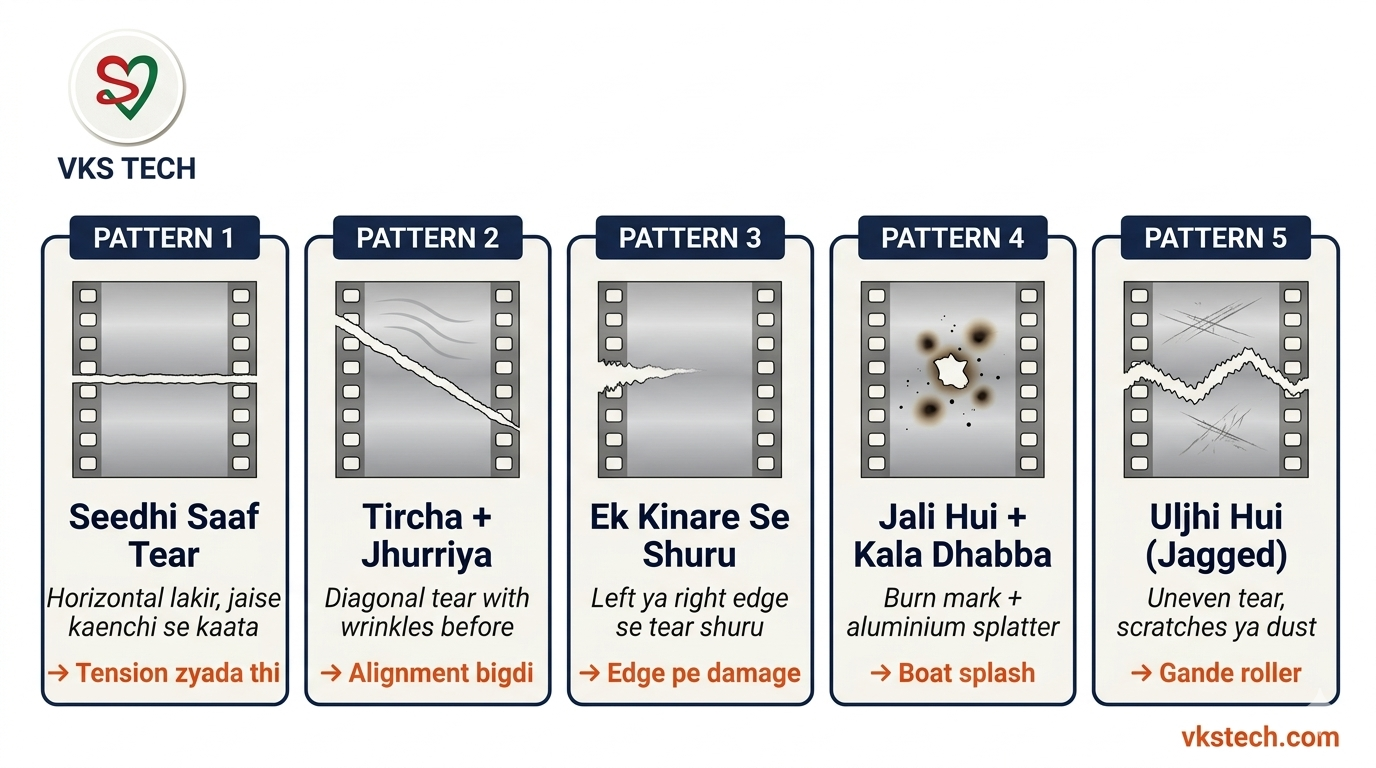
| Tear Pattern | What It Means | First Fix to Try |
|---|---|---|
| Clean straight edge (CD) | Sudden tension spike — usually wrinkle formation that folded and broke | Check tension log for pulses, inspect dancer roller |
| Diagonal tear | Off-axis tension — one side of web is pulling harder than the other | Verify roller alignment upstream; check bearing play |
| Ragged irregular tear | Edge damage propagated inward under tension | Inspect last 500m of unwinding roll for nicks or knife marks |
| Pinhole cluster tear | Pre-existing pinhole defect under stress concentration | This is a pre-existing film defect — raise NCR with supplier |
| Long fibrous tear along MD | Excessive tension during acceleration or deceleration | Review tension profile during startup and shutdown cycles |
💡 One warning — Never re-thread and restart without supervisor approval
If the same tear pattern repeats after restart, the root cause is still there. Continuing to run will produce more breaks, more waste, and mask the actual problem. A 15-minute diagnostic pause saves 6 hours of downtime later.
🔧 PART 2 — FOR THE SUPERVISOR
8 causes ranked · Diagnostic tool · Prevention habits
🔍 The 8 Hidden Causes — Ranked by Real Frequency
Real breakdown from production metallisers. Note that "film quality" — the first thing plants blame — is actually cause #7. The top six are all plant-side problems you can fix. This ranking changes how you respond to the next break: you don't call the supplier, you walk the machine.
| # | Cause | Frequency | Quick Diagnostic Check |
|---|---|---|---|
| 1 | Bearing play in tension-critical rollers | 24% | Push each roller laterally by hand — any felt play means replace |
| 2 | Sensor fouling (tension cells, dancer) | 18% | Compare displayed tension to physical tension gauge reading — drift >5% = clean/calibrate |
| 3 | Roller alignment out of spec | 14% | Laser alignment check across critical section — any roller >0.05mm off needs re-seating |
| 4 | Sudden tension pulse during acceleration | 12% | Review tension chart at start-up and shutdown — spikes >15% above setpoint |
| 5 | Contamination on drum or idlers | 9% | Wipe all rollers with IPA — accumulated deposits create local tension variation |
| 6 | Electrical noise on PLC tension loop | 7% | Scope the tension feedback signal during run — look for spikes correlated with other motor starts |
| 7 | Actual film quality defect | 9% | Only after ruling out causes 1-6. Requires NCR with specific defect photo evidence |
| 8 | Static charge buildup | 7% | Check anti-static bar current; measure surface charge on exit film with meter |

🔬 Interactive Root Cause Analyzer
Answer four quick questions about the break. The tool scores all 8 causes against your inputs and returns the top 3 most likely causes with specific fix guidance. Everything runs locally in your browser — nothing uploaded:
🛡️ Prevention Checklist — 6 Weekly Supervisor Habits
- Monday morning: review the F/16 log from the past week. Same tear pattern twice in a week means systemic cause, not random event. Open an investigation.
- Bearing play inspection on all tension-critical rollers every PM. Push each laterally by hand. Any felt play means replace immediately — no exceptions, no next-week scheduling.
- Laser alignment check monthly across the tension control zone (dancer, tension roller, drum approach). Floors settle over time; alignment drifts.
- Calibrate tension sensors quarterly against a physical reference gauge. Displayed tension is only as accurate as the last calibration.
- Walk the machine during production once per shift. Listen for noise changes at bearings. Feel idlers for vibration. Early warning beats reactive repair.
- Film quality NCR only after ruling out causes 1-6. Cause #7 being misdiagnosed as cause #1 damages the supplier relationship and masks real plant-side problems.
🎯 PART 3 — FOR THE PLANT MANAGER
5 KPIs · ₹21L bearing story · Free downloads
🏭 Real Shop Floor Story — The ₹21 Lakh Bearing
A production metalliser plant was averaging 3-4 web breaks per week on Met-2. Every break was dismissed as "film quality" and logged as supplier fault. Over six months, accumulated downtime, waste, and B-Grade rolls had reached a level that triggered the finance team to ask questions.
A senior technical consultant was brought in. His first request was unusual: "Show me your F/16 records for the last 90 days."
The plant had the records. They were mostly blank — only date, jumbo number, and "film quality" written in the cause column. No tear photos. No machine speed at break. No tension reading. The record existed for audit compliance, not for diagnosis.
The consultant asked the next shift to log properly — tear photo, exact tension, exact speed, exact roller positions. After 6 days of proper logging, the pattern was obvious: every break occurred during a specific acceleration ramp, and every tear photo showed the same diagonal signature.
That narrowed it to one cause category: tension pulse during acceleration. From the 8-cause ranking, that pointed to causes #1 (bearing play), #4 (acceleration spike), or #6 (PLC noise).
They pulled the dancer roller bearings that weekend. One bearing — the one feeding tension data to the PLC — had developed a 0.3mm radial play. Not enough to make noise. Not enough to show up on visual PM check. But enough to send wrong tension signals during acceleration, which caused the PLC to over-correct, which created the fluctuation, which led to the diagonal tear.
One ₹4,200 bearing was costing the plant ₹21 lakh per month in downtime, waste, and B-Grade downgrades. Six days of proper F/16 logging found it. The plant now runs F/16 religiously. Monthly web break rate dropped from 14 to 2.
📊 5 KPIs to Watch on Your Monday Dashboard
Plant managers don't need the full diagnostic detail — they need the five numbers that tell them whether the system is improving, stable, or slipping. Track these weekly:
| KPI | Target (World-Class) | Warning Threshold |
|---|---|---|
| Web breaks per jumbo | < 0.05 (1 break per 20 jumbos) | > 0.15 |
| Average recovery time | < 15 min | > 30 min |
| F/16 completion rate | 100% of breaks logged with photo | < 80% |
| Repeat cause rate (same cause in 7 days) | < 10% | > 25% — systemic issue |
| "Film quality" blame rate | < 10% of breaks | > 30% — diagnostic process failing |
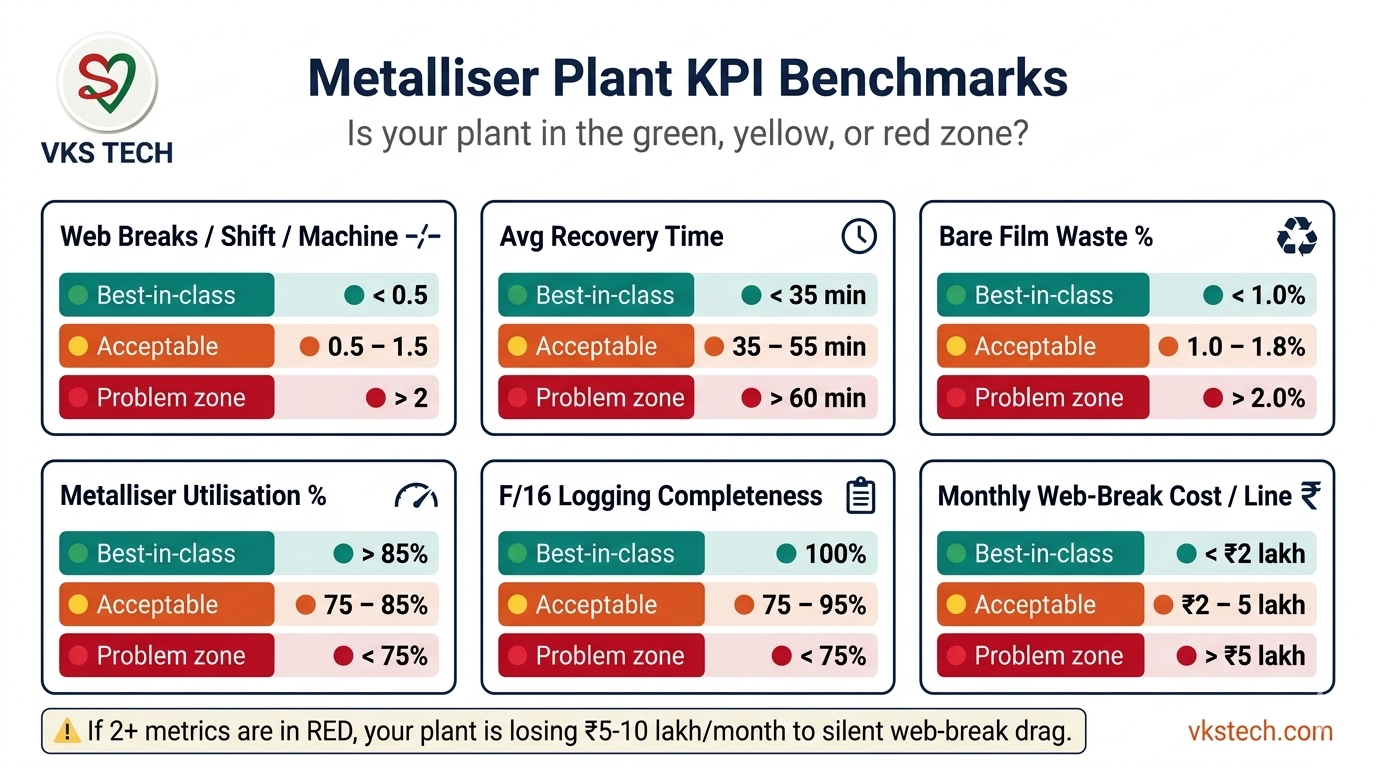
💡 The Manager's Lesson — You Cannot Fix What You Do Not Log. The single highest-leverage decision a plant manager can make is enforcing 100% F/16 completion with photo evidence. Not because audit requires it — because diagnosis requires it. Plants with strong logging discipline find root causes in days. Plants without it blame suppliers for years.
📥 Free Downloads — 3 PDFs for Your Plant
Three professionally designed PDFs covering operator quick-reference, supervisor diagnostic workflow, and audit-ready F/16 record:
💥 Web Break on Metalliser — ₹4,200 के Fix से एक Plant ने ₹21 लाख/महीना बचाए
किसी भी vacuum metalliser पर web breaks unplanned downtime का #1 कारण हैं। ये हमारी industry का सबसे ग़लत समझा गया defect भी है। ज़्यादातर plants film supplier को blame करते हैं और बात ख़त्म। लेकिन real plants में जो एक साल में हज़ारों jumbos चलाते हैं, 8 out of 10 web breaks आपके अपने plant के अंदर की किसी चीज़ से होते हैं — worn bearing, cleanliness issue, tension setting जो किसी ने verify नहीं किया।
ये blog recovery method दिखाएगा, 8 hidden causes जो actually जिस frequency से होते हैं उस order में, और असली shop floor कहानी कि कैसे एक ₹4,200 के bearing ने एक plant को चुपचाप हर महीने ₹21 लाख का नुक़सान दिया।
📖 इस Blog में क्या है (scroll करके अपना section ढूँढो):
3-step emergency response · 5 tear patterns · supervisor को कब बुलाना है
frequency से ranked 8 causes · interactive diagnostic tool · 6 prevention habits
Monday dashboard के लिए 5 KPIs · ₹21L bearing कहानी · Free downloads
🚨 PART 1 — OPERATOR के लिए
Emergency response · Tear patterns · Supervisor को कब बुलाना है
🚨 Operator Emergency Response — 2 मिनट में 3 Steps
रात के 3 बजे। Tension alarm बज गया। Viewing window से देखो — web फट गई है। घबराओ मत और parameters बदलना शुरू मत करो अभी। हर web break यही तीन steps follow करता है। ये optional नहीं हैं। इसी exact order में mandatory हैं।
Step 1 — सब कुछ रोको (10 seconds)
E-Stop दबाओ। Vent valve बंद करो। Unwinder और rewinder दोनों पर brake लगाओ। Goal है machine state exactly वैसा freeze करना जैसे break हुआ — ये evidence preserve करता है diagnosis के लिए।
Step 2 — Tear की Photo लो (30 seconds)
कुछ touch करने से पहले, दोनों torn edges की phone से photos लो — unwinder side और rewinder side। Tear की shape supervisor को बताती है कि break का cause क्या है। Film पहले move या clean कर दी तो ये evidence ख़त्म।
Step 3 — Re-threading से पहले Break Log करो (60 seconds)
Format F/16 (Web Break Record) खोलो और चार fields भरो: time, jumbo number, tear location, break के moment पे machine speed। ये एक minute से कम लगता है और plants जो web breaks eliminate करते हैं और plants जो फिर-फिर breaks झेलते हैं — दोनों के बीच यही एक habit का farq है।
👀 Tear Pattern Quick Reference
Tear की shape बताती है कौन सा component fail हुआ। Supervisor के आने से पहले, tear को इन पाँच patterns में से match करो — 20 मिनट की diagnostic back-and-forth बच जाती है।
| Tear Pattern | क्या Meaning है | पहला Fix |
|---|---|---|
| Clean straight edge (CD) | Sudden tension spike — आमतौर पर wrinkle जो fold होके टूट गई | Tension log में pulses check करो, dancer roller inspect करो |
| Diagonal tear | Off-axis tension — web की एक side दूसरी से ज़्यादा pull कर रही है | Upstream roller alignment verify करो; bearing play check |
| Ragged irregular tear | Edge damage tension के under अंदर propagate हुई | Unwinding roll के last 500m में nicks या knife marks देखो |
| Pinhole cluster tear | Pre-existing pinhole defect stress concentration के under | ये pre-existing film defect है — supplier पे NCR उठाओ |
| Long fibrous tear MD में | Acceleration या deceleration के दौरान excessive tension | Startup और shutdown cycles में tension profile review करो |
💡 एक warning — Supervisor approval के बिना re-thread और restart मत करो
अगर restart के बाद same tear pattern फिर से आती है, root cause अभी भी है। चलाते रहने से और breaks, और waste, और actual problem छुप जाएगी। 15-मिनट का diagnostic pause बाद में 6 घंटे की downtime बचाता है।
🔧 PART 2 — SUPERVISOR के लिए
8 causes ranked · Diagnostic tool · Prevention habits
🔍 8 Hidden Causes — Real Frequency से Ranked
Production metallisers से real breakdown। Note करो कि "film quality" — जो पहले हर plant blame करता है — actually cause #7 है। Top छह सारे plant-side problems हैं जो आप fix कर सकते हो। ये ranking आपके अगले break response को बदल देती है: supplier को call नहीं करते, machine walk करते हो।
| # | Cause | Frequency | Quick Diagnostic Check |
|---|---|---|---|
| 1 | Tension-critical rollers में bearing play | 24% | हर roller को हाथ से laterally push करो — थोड़ा भी play = replace |
| 2 | Sensor fouling (tension cells, dancer) | 18% | Displayed tension को physical tension gauge reading से compare करो — drift >5% = clean/calibrate |
| 3 | Roller alignment out of spec | 14% | Critical section में laser alignment check — कोई roller >0.05mm off = re-seating चाहिए |
| 4 | Acceleration के दौरान sudden tension pulse | 12% | Start-up और shutdown पे tension chart review — spikes >15% setpoint से ऊपर |
| 5 | Drum या idlers पे contamination | 9% | सारे rollers IPA से wipe करो — accumulated deposits local tension variation बनाते हैं |
| 6 | PLC tension loop पे electrical noise | 7% | Run के दौरान tension feedback signal scope करो — spikes जो दूसरे motor starts के साथ correlate करें |
| 7 | Actual film quality defect | 9% | Causes 1-6 rule out करने के बाद ही। Specific defect photo evidence के साथ NCR चाहिए |
| 8 | Static charge buildup | 7% | Anti-static bar current check; exit film पे surface charge meter से measure |
🔬 Interactive Root Cause Analyzer
Break के बारे में 4 quick questions answer करो। Tool सारे 8 causes को आपके inputs के against score करेगा और top 3 most likely causes देगा with specific fix guidance। सब browser में local चलता है — कुछ upload नहीं होता:
🛡️ Prevention Checklist — Supervisor की 6 Weekly Habits
- Monday morning: पिछले हफ्ते का F/16 log review करो। Same tear pattern एक हफ्ते में दो बार = systemic cause, random नहीं। Investigation खोलो।
- Bearing play inspection हर PM पर सारे tension-critical rollers पे। हर roller को हाथ से laterally push करो। थोड़ा भी play = तुरंत replace — कोई exception नहीं, कोई "अगले हफ्ते" नहीं।
- Laser alignment check हर महीने tension control zone में (dancer, tension roller, drum approach)। Floors time के साथ settle होते हैं; alignment drift होती है।
- Tension sensors quarterly calibrate करो physical reference gauge के against। Displayed tension उतनी ही accurate है जितनी last calibration थी।
- Production के दौरान machine walk करो हर shift एक बार। Bearings पे noise changes सुनो। Idlers में vibration feel करो। Early warning reactive repair से बेहतर है।
- Film quality NCR causes 1-6 rule out करने के बाद ही। Cause #7 को cause #1 समझना supplier relationship damage करता है और real plant-side problems छुपाता है।
🎯 PART 3 — PLANT MANAGER के लिए
5 KPIs · ₹21L bearing story · Free downloads
🏭 असली Shop Floor कहानी — ₹21 लाख का Bearing
एक production metalliser plant Met-2 पे average 3-4 web breaks per week झेल रहा था। हर break को "film quality" कह कर dismiss कर दिया जाता था और supplier fault log होता था। छह महीनों में, accumulated downtime, waste, और B-Grade rolls इतने बढ़े कि finance team ने questions पूछने शुरू किए।
एक senior technical consultant बुलाया गया। उनकी पहली request unusual थी: "पिछले 90 दिन के F/16 records दिखाओ।"
Plant के पास records थे। मगर ज़्यादातर blank थे — सिर्फ़ date, jumbo number, और cause column में "film quality" लिखा था। कोई tear photos नहीं। Break पे machine speed नहीं। Tension reading नहीं। Record audit compliance के लिए था, diagnosis के लिए नहीं।
Consultant ने next shift को बोला properly log करें — tear photo, exact tension, exact speed, exact roller positions। 6 दिन proper logging के बाद pattern obvious हो गया: हर break specific acceleration ramp पे हुआ, और हर tear photo में same diagonal signature थी।
ये एक cause category पे narrow हो गया: acceleration के दौरान tension pulse। 8-cause ranking से, ये causes #1 (bearing play), #4 (acceleration spike), या #6 (PLC noise) की तरफ़ point करता था।
Weekend में dancer roller bearings pull किए। एक bearing — जो PLC को tension data feed कर रहा था — उसमें 0.3mm radial play develop हो गई थी। Noise करने के लिए enough नहीं। Visual PM check पे दिखने के लिए enough नहीं। लेकिन acceleration के दौरान PLC को wrong tension signals भेजने के लिए enough — जिससे PLC over-correct करता, fluctuation बनती, diagonal tear पे end होती।
एक ₹4,200 का bearing plant को हर महीने ₹21 लाख की downtime, waste, और B-Grade downgrades दे रहा था। 6 दिन की proper F/16 logging ने ढूँढ लिया। Plant अब F/16 religiously चलाता है। Monthly web break rate 14 से 2 पर आ गया।
📊 Monday Dashboard के लिए 5 KPIs
Plant managers को full diagnostic detail नहीं चाहिए — उन्हें वो पाँच numbers चाहिए जो बताएं system improve हो रहा है, stable है, या slip हो रहा है। Weekly track करो:
| KPI | Target (World-Class) | Warning Threshold |
|---|---|---|
| Web breaks per jumbo | < 0.05 (20 jumbos में 1 break) | > 0.15 |
| Average recovery time | < 15 min | > 30 min |
| F/16 completion rate | 100% breaks photo के साथ logged | < 80% |
| Repeat cause rate (7 दिन में same cause) | < 10% | > 25% — systemic issue |
| "Film quality" blame rate | < 10% breaks | > 30% — diagnostic process fail हो रहा है |
💡 Manager की सीख — जो log नहीं होता वो fix नहीं होता। Plant manager का सबसे highest-leverage decision है 100% F/16 completion with photo evidence enforce करना। Audit requires इसलिए नहीं — diagnosis requires इसलिए। Strong logging discipline वाले plants root causes दिनों में ढूँढते हैं। Logging के बिना वाले plants सालों तक suppliers को blame करते हैं।
📥 मुफ़्त Downloads — आपके Plant के लिए 3 PDFs
तीन professionally designed PDFs — operator quick-reference, supervisor diagnostic workflow, और audit-ready F/16 record: