
🧹 What is 5S and How to Maintain It on the Shop Floor — A Practical Guide for Flexible Packaging Plants
📖 12-min read | The Methodology Every Flexible Packaging Plant Talks About But Few Actually Sustain | Includes 5 Free Downloadable Bilingual Excel Formats | Published May 2026
Every flexible packaging plant has heard of 5S. Many have a dusty 5S certificate on the wall from a 2018 audit. A few are running fresh audits monthly. Even fewer are actually getting better month-on-month. The gap between "knowing about 5S" and "running 5S well" is enormous, and it almost always comes down to one thing — the audit format and the discipline to use it daily. This blog explains the five Japanese principles in plain language using the metalliser, slitter, lamination, and printing context you actually work in. Then it gives you the same audit formats my plant uses — five bilingual Excel files (English + Hindi), free to download, with auto-calculating compliance percentages and a monthly trend tracker that auto-graphs your improvement.
2S Set in Order (सही जगह) — a place for everything, everything in its place.
3S Shine (सफाई) — clean as you inspect.
4S Standardize (मानकीकरण) — visual standards everyone follows.
5S Sustain (निरंतरता) — discipline that holds without reminders.
📐 Where 5S Came From and Why It Travels Well
5S originated in Toyota's manufacturing system in post-war Japan, codifying habits that machinists and toolroom workers had used for generations into a teachable five-step method. The Japanese names — Seiri, Seiton, Seiso, Seiketsu, Shitsuke — translate to Sort, Set in Order, Shine, Standardize, and Sustain. Toyota used 5S as the foundation underneath everything else: TPM, lean manufacturing, just-in-time, kaizen. Without a clean and orderly shop floor, the more advanced methodologies have nothing solid to stand on.
What makes 5S travel well across industries — automotive, aerospace, food processing, electronics, and yes, flexible packaging — is that the principles are universal but the checkpoints are specific. A metalliser shop floor's "set in order" looks different from an aerospace bench's, but the underlying discipline is the same. The mistake plants make is trying to import a generic 5S checklist from a textbook instead of writing one in the language of their actual machines and materials. The audit checklists in the downloads below are written in flexible-packaging language — they reference Lutz blades, Stanley knives, Nataraj cutters, jumbo rolls, vacuum lines, boat-set storage. Generic checklists get ignored; specific ones get used.
🛠️ The Five Ss Explained for a Flexible Packaging Plant
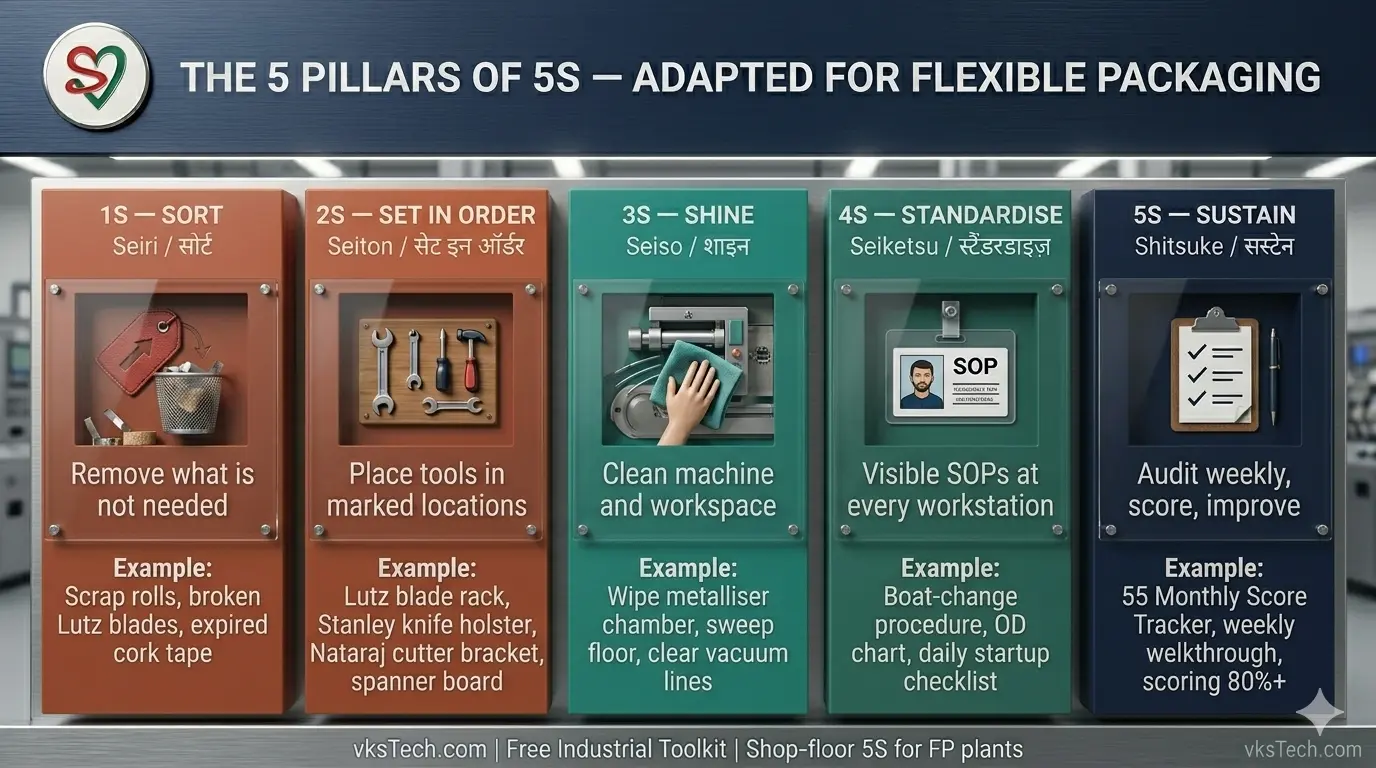
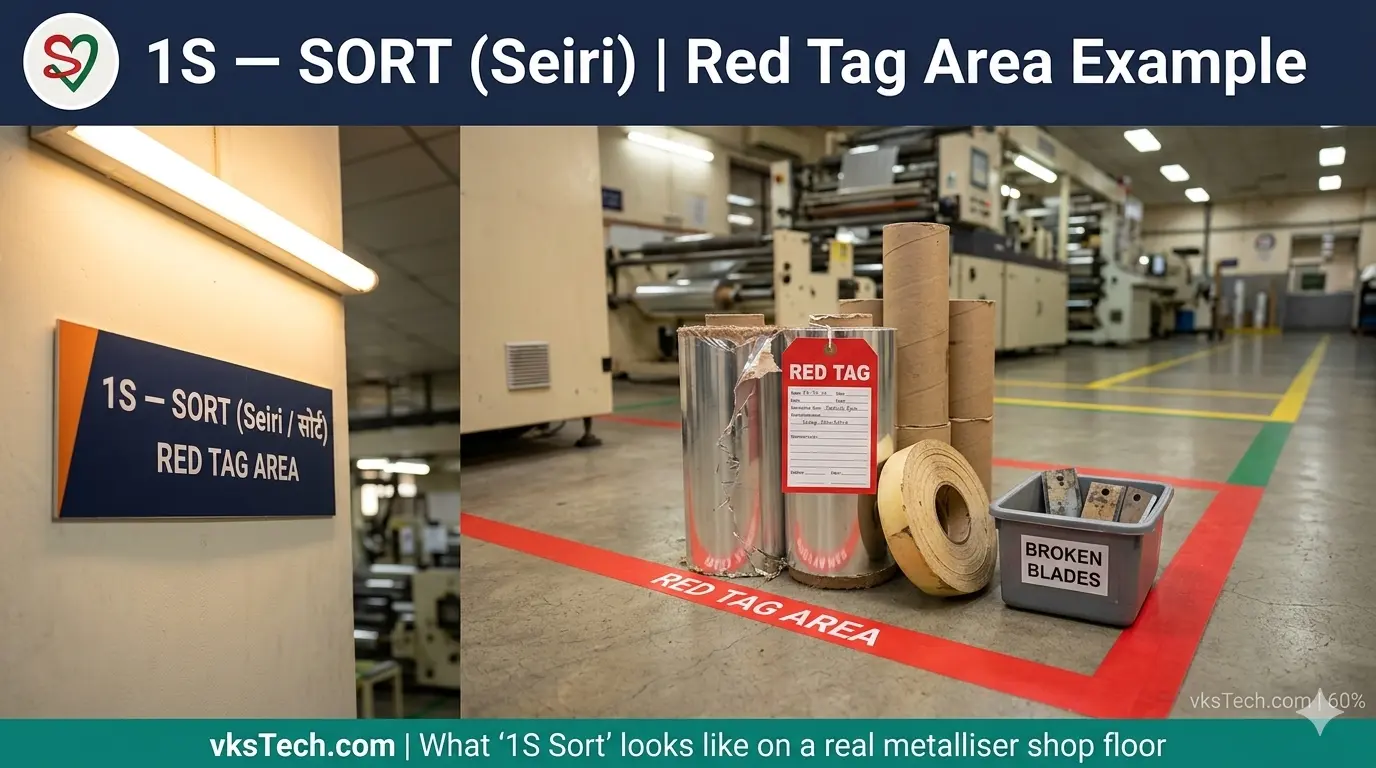
1S — Sort (छँटाई). Walk through your metalliser or slitter area. For every single object you see, ask: do we need this here, today, to do today's work? If the answer is no, the object should not be on the floor. Scrap rolls from yesterday's cycle, empty cores from last week, the broken Lutz blade someone said they would "look at later," the stack of obsolete trial reels — all of it is clutter. Sort means decisive removal, not rearrangement. The first 5S audit at a plant typically reveals 30-50% of floor objects are unnecessary. Removing them creates immediate visible space and reveals problems (oil leaks, missing tools, damaged flooring) that were hidden by the clutter.
2S — Set in Order (सही जगह). Everything that remains after Sort gets a designated, marked location. Spanners on a labelled tool board with outline silhouettes. Lutz blades, Stanley knives, and Nataraj cutters in a numbered rack. Input rolls on the marked yellow zone, output rolls on the marked green zone. The principle is simple: if a missing tool is invisible, it can't be found in 30 seconds. If a tool's home is clearly marked, anyone can put it back without thinking. Set in Order eliminates the "where is the spanner" 5-minute search that happens 20 times a shift. Multiplied across the year, this is real downtime recovery.

3S — Shine (सफाई). Cleaning is integrated with inspection — you don't just clean, you observe while cleaning. A wipe down of the chill drum reveals the small oil leak that started yesterday. A sweep of the floor under the unwind reveals the loose bolt that fell off the bearing housing. The Japanese term Seiso literally means "to polish to a state of cleanliness," but in industrial application the deeper meaning is "clean to the point where you would notice the smallest abnormality." Shine without inspection is housekeeping. Shine with inspection is preventive maintenance disguised as housekeeping.

4S — Standardize (मानकीकरण). The first three Ss are activities. Standardize is the system that makes them repeatable. Visual standards — laminated photographs showing what "good" looks like, colour-coded zones on the floor, written cleaning schedules with named owners and times, audit charts displayed at the area entrance. The standardisation makes 5S survive the departure of the enthusiastic supervisor who was driving it. Without standardisation, 5S collapses the moment the champion goes on leave. With standardisation, it survives.

5S — Sustain (निरंतरता). The hardest of the five. Every plant can do a one-time 5S blitz before a customer audit. Few can sustain it for twelve months without backsliding. Sustain means daily discipline — the operator who doesn't need a reminder to put the spanner back, the shift leader who walks the audit checklist without being asked, the plant manager who treats the monthly 5S score as seriously as the production number. Sustain is built by repetition, by visible scoring, and by leadership treating 5S compliance as a non-negotiable expectation. The Monthly Score Tracker (Format 5 below) is specifically designed to make backsliding visible — when the trend line bends downward, leadership has a number to act on before the slide becomes terminal.

📊 What the Audit Looks Like Day-to-Day
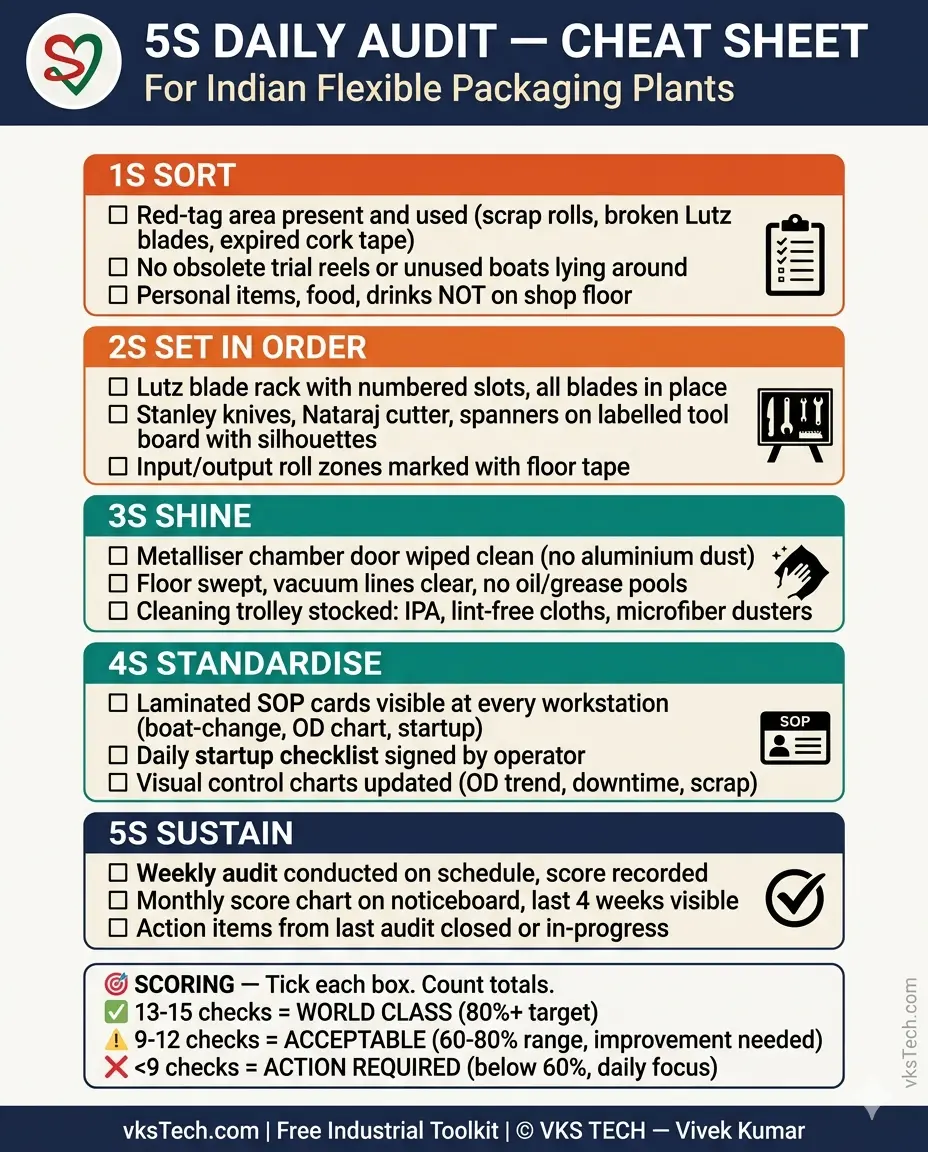
The audit format used in the downloadable Excel sheets is a 13-checkpoint grid covering all five Ss. Each row is a checkpoint; each of the next 30 columns is one day of the month. The auditor for that area scores each checkpoint daily as 0, 1, or 2. The Total Score row at the bottom auto-sums each day's column. The Compliance % row shows the day's percentage out of the maximum 26 points. At month-end, the average of those daily percentages becomes the month's score for that area, which gets entered into the Monthly Score Tracker for trend analysis.
The conditional formatting in the Total Score row visually highlights how the day went — teal when scores are high, orange when too many 0s have accumulated. The auditor signs daily. The whole sheet fits on one A3 landscape print, laminated and clipped next to the machine.
The single most common 5S audit failure is making the audit too easy. If every checkpoint scores 2 every day, the audit is not measuring anything real — it has become a paperwork exercise. The fix is to write checkpoints that distinguish "good" from "great." For example, instead of "Floor is clean," write "Floor around Metalliser is clean and dry, with no film pieces, dust, or oil visible from a standing position." The second formulation forces the auditor to actually look. Specificity is what makes the audit trustworthy.
⬇ Free Downloadable Formats — All Five Bilingual Excel Files
All five formats are fully editable Excel files (.xlsx) with English and Hindi side-by-side. All formulas are pre-built and verified. Employee-specific data has been replaced with placeholders — fill in your own team. Print on A3 landscape for the audit sheets, A4 landscape for the roster and tracker.
⚠️ Three Common 5S Mistakes Indian FP Plants Make
1. Doing 5S only before customer audits. The plant is spotless on Day 30 of every customer audit cycle and slowly decays for the next 89 days. The audit format above is designed to prevent this — by scoring daily, the slow decay becomes visible in week 2, not week 13. Customers also notice the difference between a plant that has obviously prepared for the audit and a plant that is genuinely run that way every day.
2. Treating 5S as a housekeeping programme. 5S is not housekeeping. Housekeeping is "the floor is clean." 5S is "the floor is clean and the auditor noticed the small oil leak under the unwind during cleaning, and a maintenance ticket has been raised." The difference is whether the cleaning produces information or just appearance. Plants that treat 5S as housekeeping never get past the 70% compliance ceiling — there is no information loop driving improvement.
3. Audits without consequences. If the score is 65% three months in a row and no one talks about it, the audit teaches the team that the score doesn't matter. The Monthly Score Tracker (Format 5) is designed for visibility — it goes on the noticeboard. The plant manager reviews it in the monthly review meeting. Areas in the orange zone get specific corrective actions with named owners and dates. Without this loop, even the best audit format becomes a paperwork ritual.
📚 Related reads on this site: This blog covers 5S methodology and audit format. Blog #25 covers the SOP-vs-Work-Instruction distinction that interacts with 5S Standardize. Blog #39 covers Machine Utilisation %, the metric that often improves visibly when 5S compliance crosses 85%. The full set of free calculators and downloadable formats is at vkstech.com/#tools.
Working with a non-metalliser FP department and the generic format doesn't quite fit? Need help with a department-specific checkpoint list (printing, lamination, extrusion, pouching)? Want to discuss how to roll out 5S in a plant that has tried and failed before? Drop your question in the Q&A section at the bottom of this page — I respond personally to every thoughtful question.
📌 What's next. If 5S is the foundation, OEE (Overall Equipment Effectiveness) is what sits on top — the metric that quantifies how much of your machine's available time is actually producing good output. The next blog will cover OEE for Metallisers in the same calculator-deep-dive format used for Blogs 35-39.
🧹 5S क्या है और Shop Floor पर कैसे Maintain करें — Flexible Packaging Plants के लिए Practical Guide
📖 12-min read | वो Methodology जिसकी हर Flexible Packaging Plant बात करती है पर कम Actually Sustain करती हैं | 5 Free Downloadable Bilingual Excel Formats शामिल | May 2026 में published
हर flexible packaging plant ने 5S के बारे में सुना है। कई के पास 2018 के audit का dusty 5S certificate दीवार पर है। कुछ monthly fresh audits run कर रहे हैं। और भी कम actually month-on-month better हो रहे हैं। "5S के बारे में जानने" और "5S well run करने" के बीच का gap बहुत बड़ा है, और लगभग हमेशा एक बात पर आता है — audit format और इसे daily use करने की discipline। ये blog पाँच Japanese principles को plain language में explain करता है उस metalliser, slitter, lamination, और printing context में जिसमें आप actually काम करते हैं। फिर ये आपको वही audit formats देता है जो मेरा plant use करता है — पाँच bilingual Excel files (English + Hindi), free download के लिए, auto-calculating compliance percentages के साथ और एक monthly trend tracker जो आपके improvement को auto-graph करता है।
2S Set in Order (सही जगह) — हर चीज़ की एक जगह, हर चीज़ अपनी जगह पर।
3S Shine (सफाई) — सफाई के साथ inspection करें।
4S Standardize (मानकीकरण) — visual standards जो सब follow करें।
5S Sustain (निरंतरता) — discipline जो बिना reminder के टिकती है।
📐 5S कहाँ से आया और क्यों Industries में Travel करता है
5S Toyota के manufacturing system में post-war Japan में originate हुआ, machinists और toolroom workers की generations से चली आ रही habits को teachable five-step method में codify करते हुए। Japanese names — Seiri, Seiton, Seiso, Seiketsu, Shitsuke — Sort, Set in Order, Shine, Standardize, और Sustain में translate होते हैं। Toyota ने 5S को हर चीज़ के नीचे की foundation के रूप में use किया: TPM, lean manufacturing, just-in-time, kaizen। साफ और orderly shop floor के बिना, advanced methodologies के पास खड़े होने को कुछ solid नहीं है।
5S को industries में travel करने लायक जो बनाता है — automotive, aerospace, food processing, electronics, और हाँ, flexible packaging — वो ये है कि principles universal हैं पर checkpoints specific हैं। Metalliser shop floor का "set in order" aerospace bench के "set in order" से अलग दिखता है, पर underlying discipline same है। Plants जो mistake करते हैं वो ये है कि वो textbook से generic 5S checklist import करने की कोशिश करते हैं अपने actual machines और materials की language में लिखने के बजाय। नीचे downloads में audit checklists flexible-packaging language में लिखी हैं — वो Lutz blades, Stanley knives, Nataraj cutters, jumbo rolls, vacuum lines, boat-set storage reference करती हैं। Generic checklists ignored हो जाती हैं; specific वाली used होती हैं।
🛠️ Flexible Packaging Plant के लिए पाँच Ss Explained
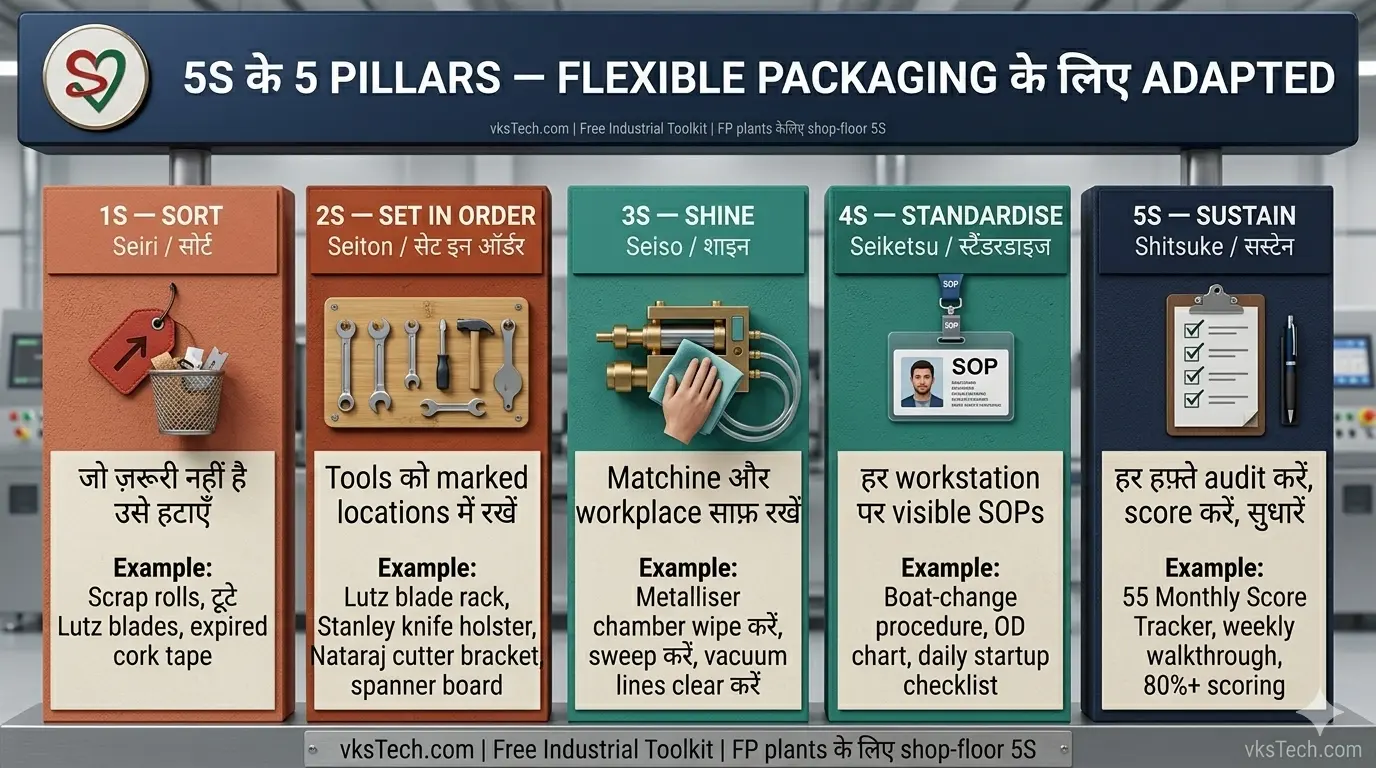
1S — Sort (छँटाई)। अपने metalliser या slitter area में चलें। जो भी एक object दिखे, पूछें: क्या हमें ये यहाँ, आज, आज का काम करने के लिए चाहिए? अगर answer नहीं है, तो object floor पर नहीं होना चाहिए। कल के cycle के scrap rolls, पिछले हफ़्ते के empty cores, टूटा हुआ Lutz blade जिसे किसी ने "बाद में देखूँगा" कहा था, obsolete trial reels का stack — ये सब clutter है। Sort का मतलब decisive removal है, rearrangement नहीं। Plant पर पहला 5S audit typically बताता है कि 30-50% floor objects unnecessary हैं। उन्हें हटाने से immediate visible space बनती है और problems (oil leaks, missing tools, damaged flooring) reveal होती हैं जो clutter ने hide कर रखी थीं।
2S — Set in Order (सही जगह)। Sort के बाद जो रहता है उसे एक designated, marked location मिलती है। Spanners labelled tool board पर outline silhouettes के साथ। Lutz blades, Stanley knives, Nataraj cutters numbered rack में। Input rolls marked yellow zone पर, output rolls marked green zone पर। Principle simple है: अगर missing tool invisible है, उसे 30 seconds में नहीं ढूँढा जा सकता। अगर tool का घर clearly marked है, कोई भी उसे बिना सोचे वापस रख सकता है। Set in Order उस "spanner कहाँ है" 5-minute search को eliminate करता है जो shift में 20 बार होती है। साल भर में multiplied, ये real downtime recovery है।
3S — Shine (सफाई)। सफाई inspection के साथ integrated है — आप सिर्फ़ साफ नहीं करते, आप साफ करते हुए observe भी करते हैं। Chill drum का wipe down उस छोटी oil leak को reveal करता है जो कल शुरू हुई। Unwind के नीचे floor का sweep उस loose bolt को reveal करता है जो bearing housing से गिरा। Japanese term Seiso का literal मतलब "cleanliness state तक polish करना" है, पर industrial application में deeper meaning ये है कि "इतना साफ कि सबसे छोटी abnormality notice हो।" Inspection के बिना Shine housekeeping है। Inspection के साथ Shine preventive maintenance है housekeeping के रूप में disguised।
4S — Standardize (मानकीकरण)। पहले तीन Ss activities हैं। Standardize वो system है जो उन्हें repeatable बनाता है। Visual standards — laminated photographs जो दिखाते हैं "good" कैसा दिखता है, floor पर colour-coded zones, named owners और times के साथ written cleaning schedules, area entrance पर displayed audit charts। Standardisation 5S को उस enthusiastic supervisor के जाने के बाद भी survive कराती है जो इसे drive कर रहा था। Standardisation के बिना, champion के leave पर जाते ही 5S collapse हो जाता है। Standardisation के साथ, ये survive करता है।
5S — Sustain (निरंतरता)। पाँच में सबसे hard। हर plant customer audit से पहले one-time 5S blitz कर सकता है। बहुत कम बारह महीने बिना backsliding के sustain कर सकते हैं। Sustain का मतलब daily discipline है — वो operator जिसे spanner वापस रखने का reminder नहीं चाहिए, वो shift leader जो audit checklist बिना पूछे walk करता है, वो plant manager जो monthly 5S score को production number जितना seriously लेता है। Sustain repetition से, visible scoring से, और leadership के 5S compliance को non-negotiable expectation मानने से बनता है। Monthly Score Tracker (नीचे Format 5) specifically backsliding को visible बनाने के लिए design किया है — जब trend line नीचे bend करती है, leadership के पास action के लिए number होता है slide terminal होने से पहले।
📊 Audit Day-to-Day कैसा दिखता है
Downloadable Excel sheets में used audit format एक 13-checkpoint grid है जो सभी पाँच Ss cover करता है। हर row एक checkpoint है; अगले 30 columns में हर एक महीने का एक दिन है। उस area का auditor हर checkpoint को daily 0, 1, या 2 score करता है। Bottom पर Total Score row हर दिन के column को auto-sum करती है। Compliance % row maximum 26 points में से दिन का percentage दिखाती है। महीने के अंत में, उन daily percentages का average उस area का महीने का score बन जाता है, जो trend analysis के लिए Monthly Score Tracker में जाता है।
Total Score row में conditional formatting visually highlight करती है कि दिन कैसा गया — scores high होने पर teal, बहुत 0s जमा होने पर orange। Auditor daily sign करता है। पूरी sheet एक A3 landscape print पर fit होती है, laminated और मशीन के पास clipped।
सबसे common 5S audit failure audit को बहुत easy बनाना है। अगर हर checkpoint हर दिन 2 score करता है, audit कुछ real measure नहीं कर रहा — ये paperwork exercise बन गया है। Fix है ऐसे checkpoints लिखें जो "good" को "great" से distinguish करें। उदाहरण के लिए, "Floor साफ है" लिखने के बजाय, "Metalliser के आसपास Floor साफ और सूखा है, standing position से कोई film pieces, dust, या oil दिखाई नहीं देता।" दूसरा formulation auditor को actually देखने पर force करता है। Specificity वो है जो audit को trustworthy बनाती है।
⬇ Free Downloadable Formats — पाँच Bilingual Excel Files
सभी पाँच formats fully editable Excel files (.xlsx) हैं English और Hindi side-by-side के साथ। सभी formulas pre-built और verified हैं। Employee-specific data placeholders से replace किया है — अपनी team भरें। Audit sheets के लिए A3 landscape पर print करें, roster और tracker के लिए A4 landscape।
⚠️ तीन Common 5S Mistakes Indian FP Plants करती हैं
1. 5S सिर्फ़ customer audits से पहले करना। Plant हर customer audit cycle के Day 30 पर spotless होता है और अगले 89 दिनों में slowly decay हो जाता है। ऊपर का audit format इसे prevent करने के लिए design किया है — daily score करने से, slow decay week 2 में visible होता है, week 13 में नहीं। Customers भी एक plant जो obviously audit के लिए prepared है और एक plant जो genuinely इसी तरह हर दिन run होता है के बीच का difference notice करते हैं।
2. 5S को housekeeping programme की तरह treat करना। 5S housekeeping नहीं है। Housekeeping है "Floor साफ है।" 5S है "Floor साफ है और auditor ने unwind के नीचे cleaning के दौरान small oil leak notice किया, और maintenance ticket raise हुआ है।" Difference ये है कि cleaning information produce करती है या सिर्फ़ appearance। Plants जो 5S को housekeeping की तरह treat करते हैं वो 70% compliance ceiling कभी पार नहीं करते — improvement drive करने वाला कोई information loop नहीं है।
3. Audits बिना consequences के। अगर तीन महीने लगातार score 65% है और कोई बात नहीं करता, audit team को सिखाता है score matter नहीं करता। Monthly Score Tracker (Format 5) visibility के लिए design किया है — ये noticeboard पर जाता है। Plant manager monthly review meeting में इसे review करता है। Orange zone वाले areas को specific corrective actions named owners और dates के साथ मिलते हैं। इस loop के बिना, सबसे अच्छा audit format भी paperwork ritual बन जाता है।
📚 इस site पर related reads: ये blog 5S methodology और audit format cover करता है। Blog #25 SOP-vs-Work-Instruction distinction cover करता है जो 5S Standardize के साथ interact करती है। Blog #39 Machine Utilisation % cover करता है, वो metric जो often visibly improve होता है जब 5S compliance 85% पार करता है। Free calculators और downloadable formats का full set vkstech.com/#tools पर है।
Non-metalliser FP department के साथ काम कर रहे हैं और generic format quite fit नहीं हो रहा? Department-specific checkpoint list (printing, lamination, extrusion, pouching) के लिए help चाहिए? Discuss करना चाहते हैं कैसे एक plant में 5S roll out करें जिसने पहले try करके fail किया है? अपना सवाल इस page के bottom पर Q&A section में डालें — मैं हर thoughtful question का personally जवाब देता हूँ।
📌 आगे क्या। अगर 5S foundation है, OEE (Overall Equipment Effectiveness) उस पर बैठता है — वो metric जो quantify करता है कि आपकी मशीन का कितना available time actually good output produce कर रहा है। अगला blog OEE for Metallisers cover करेगा same calculator-deep-dive format में जो Blogs 35-39 के लिए used हुआ।